
- OUR CASES
-
Join Us
- Current Issues
-
About
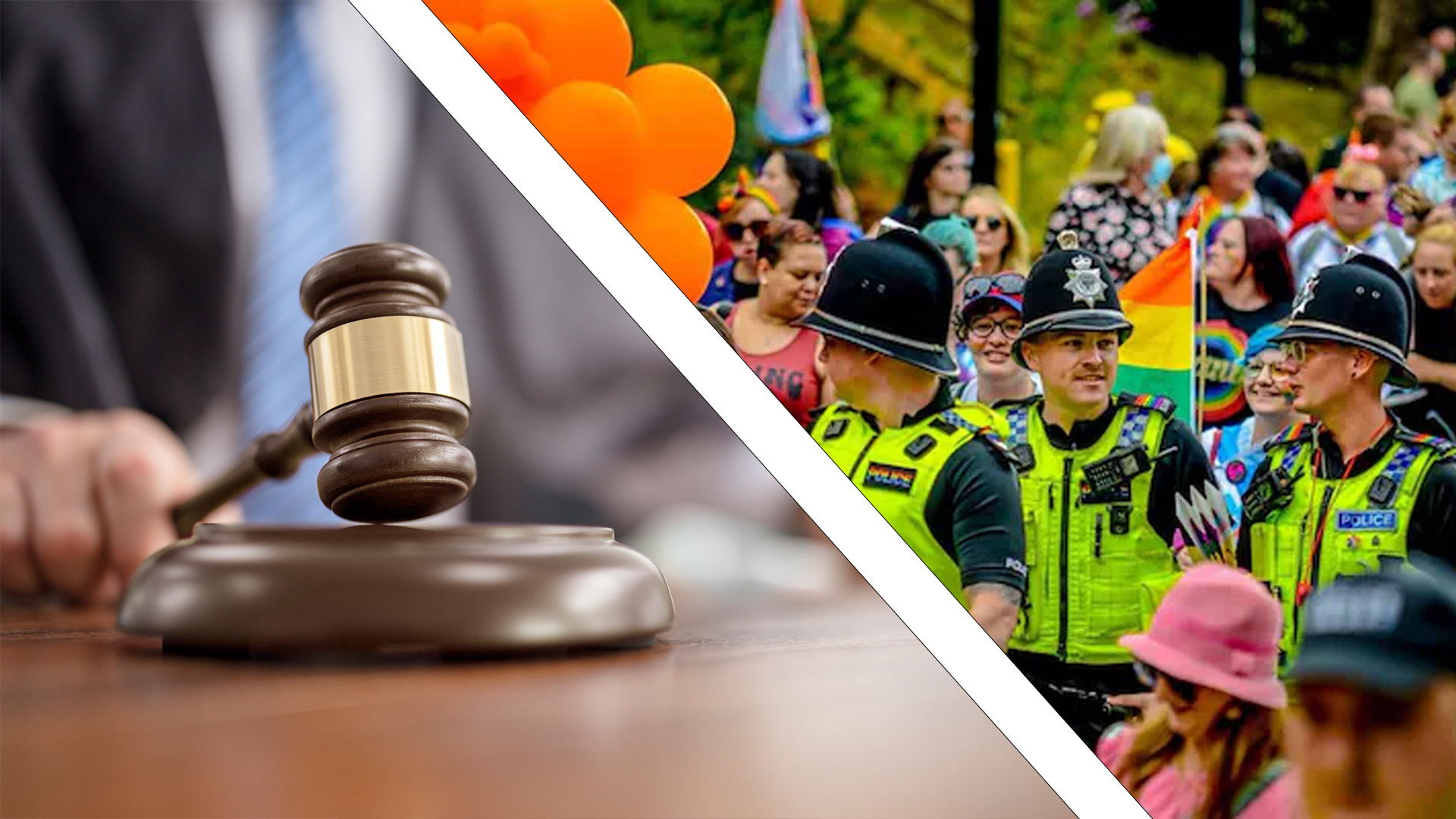
UK court pushes back against two-tier policing
A court in the United Kingdom has pushed back against police marching in ‘Pride’ parades, after a chief constable’s decision to allow uniformed police officers to take part in a Pride march was ruled unlawful.
The decision could signal the start of a pushback against two-tier policing, following criticism that police were focussing their energy on progressive causes such as Pride parades, and ideological crackdowns on conservatives, rather than solving crimes.
Police across Britain drew global derision for arresting thousands of Britons for online social media posts, such as Lucy Connelly, who was jailed for a post she quickly deleted.
Other examples such as Billboard Chris’s arrest in Belgium, or the fine he received in Brisbane, reflect a form of policing seen around the world that’s more intent on silencing conservatives than solving crimes.
But there is hope that may change.
The case in question was brought against Northumbria Police Chief Constable Vanessa Jardine by Linzi Smith, a self-described “gender critical” lesbian woman from Newcastle.
Ms Smith argued Mrs Jardine and her officers’ participation in Newcastle Pride last year meant they would have been unable to remain impartial if a dispute between those with similar gender critical beliefs and transgender rights supporters had occurred.
Ms Smith said she was “delighted” with the court’s judgement, feeling the force had “abandoned their duty of impartiality and embraced a highly controversial political cause”.
“Their participation in the Pride march clearly shows where their sympathies lie,” she said.
The High Court ruling reinforces the fact that police should not be promoting gender ideology or picking sides in divisive political issues.
The judgement considered that marching in such a parade would be interpreted as a political act.
“[Police] support for transgender rights by taking part in the 2024 march would be likely to give the impression that they may not deal with the matter fairly and impartially,” the ruling shows.
It’s time to set boundaries for the police, starting with the obvious: Policing shouldn’t be political and officers can support ideological causes in their own time.
Do you like this page?