
- OUR CASES
-
Join Us
- Current Issues
-
About
When speaking the truth becomes a crime
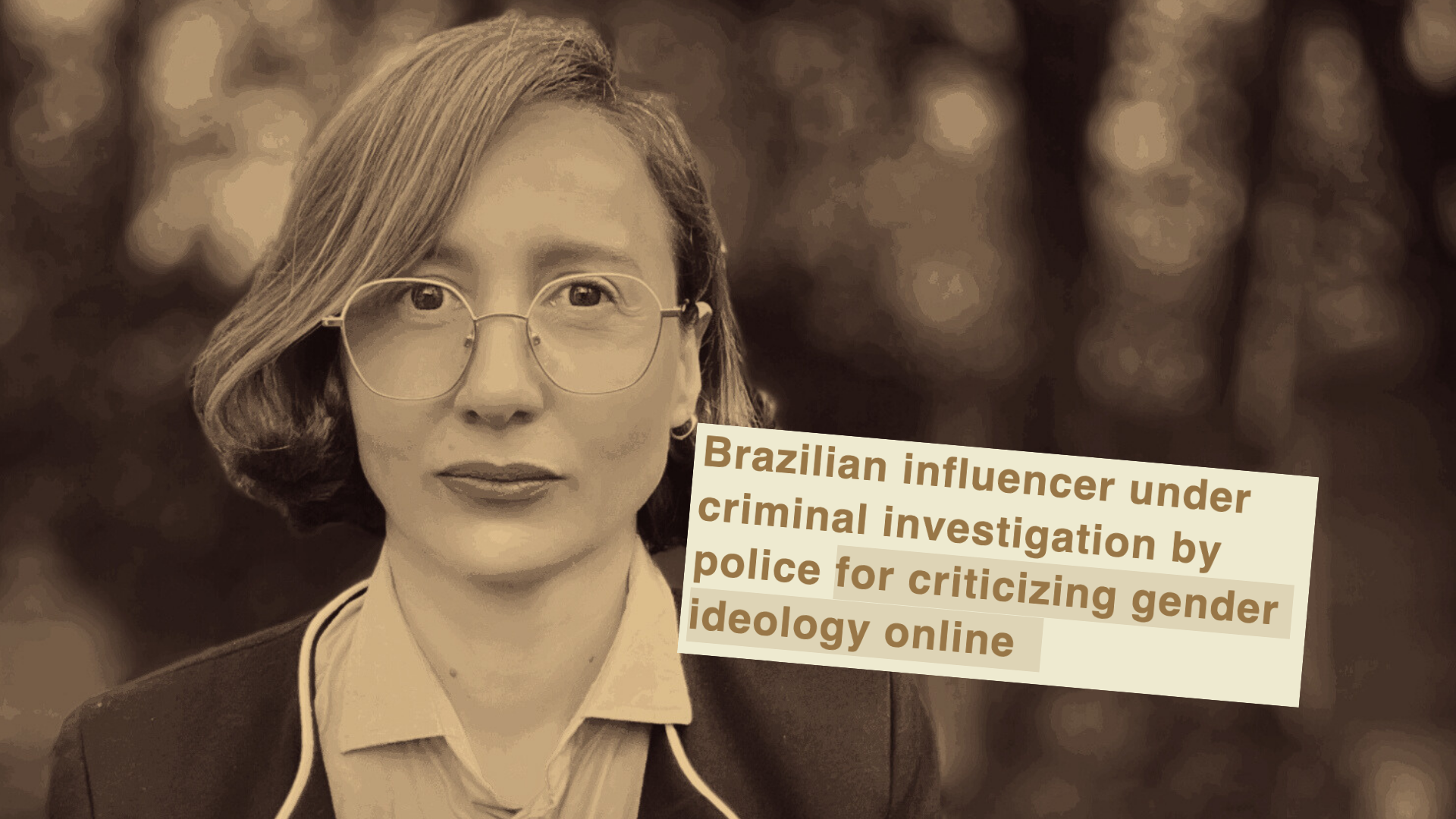
The case of Nine Borges, a Brazilian social media commentator, offers a sobering glimpse into where censorship can lead when governments censor disagreement with gender ideology.
Borges, who is currently living in the UK, has been placed under criminal investigation by Brazilian police after publicly criticising a male politician who identifies as female. Her commentary – which questioned gender ideology and affirmed biological reality – has been labelled “transphobia” under Brazil’s expanding hate speech framework. If prosecuted, Borges could face criminal penalties simply for expressing her views online.
This is not an isolated case. As Alliance Defending Freedom International has documented, Brazil has seen a growing number of investigations and prosecutions targeting journalists, commentators, and ordinary citizens who speak critically about gender ideology. In several instances, criminal law – not just civil complaint mechanisms – is being used to silence dissent.
While Australia has not yet reached the point of criminally prosecuting people for expressing views about sex and gender, the trajectory should concern us. The Albanese Government’s newly passed hate speech laws significantly expand the scope of what can be considered unlawful expression. Vague concepts such as “psychological harm” and “hate” leave enormous discretion in the hands of authorities and create real uncertainty for those engaging in public debate.
The parallels with Australian cases are already emerging. Jasmine Sussex, an HRLA client, is currently defending herself against a vilification complaint for raising concerns about “male breastfeeding” and child safety. While her case is civil rather than criminal, the underlying principle is the same: expressing views grounded in biology and concern for women and children is increasingly treated as suspect, dangerous, or unlawful.
The experience of Nine Borges shows where this path can lead. When the state begins policing ideas – particularly on contested moral and scientific questions – the boundary between regulation and repression quickly erodes. Criminal investigations become tools of intimidation, and the cost of speaking openly becomes too high for many to bear.
At HRLA, we defend the freedom to speak truthfully, respectfully, and without fear of punishment. We believe robust debate – not censorship or criminalisation – is the foundation of a free society.
Australia should learn from overseas examples like Brazil. Once the law is used to enforce ideological conformity, reclaiming freedom is far harder than preserving it in the first place.
Do you like this page?