
- OUR CASES
-
Join Us
- Current Issues
-
About
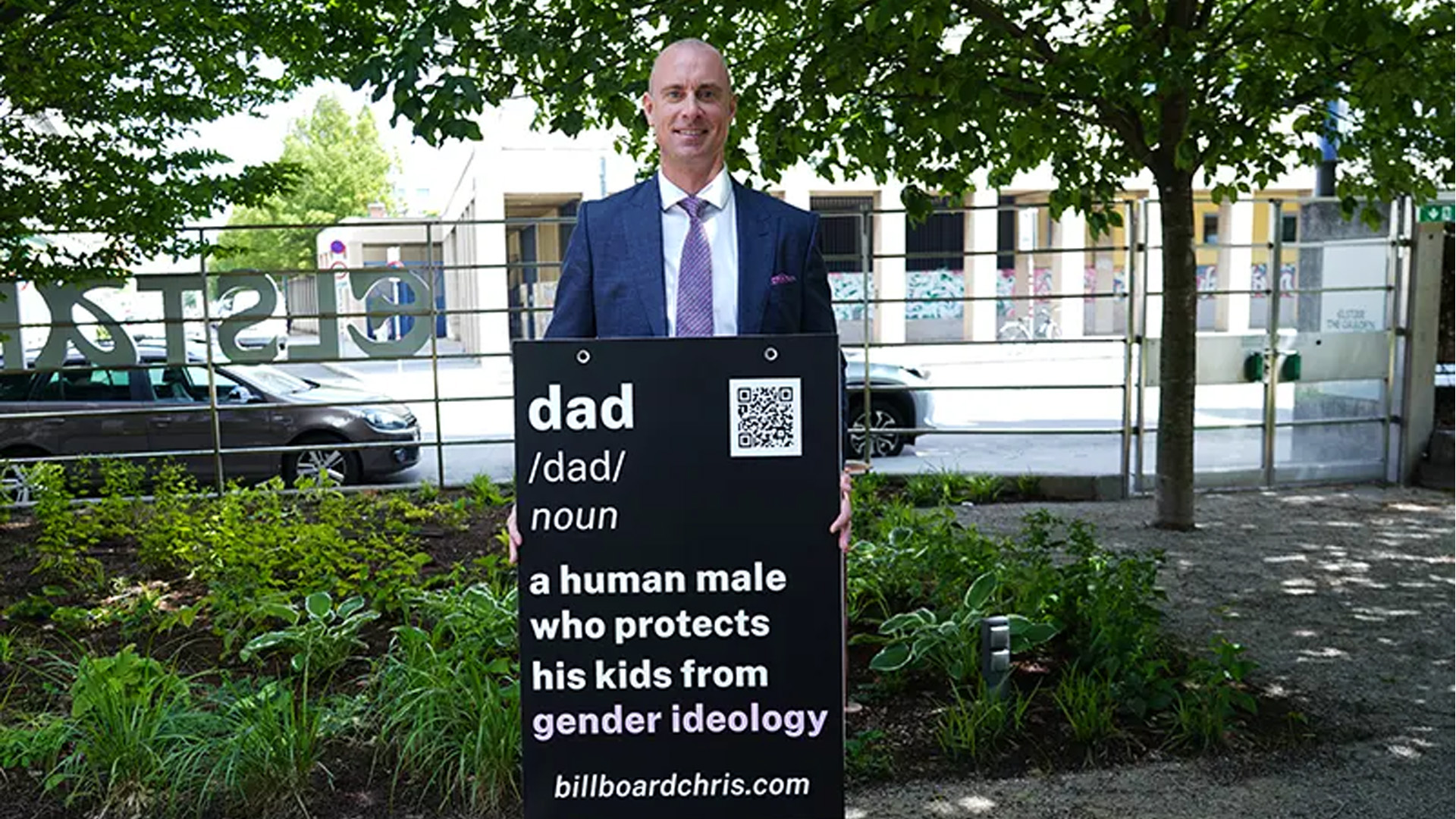
Billboard Chris wins – but Australian laws still stifle fundamental freedoms
Canadian activist Billboard Chris has just won a major victory for free speech. But the law that nearly silenced him is still very much in force – and that should concern every Australian who values open debate.
Last week, the Administrative Review Tribunal ruled that a 2024 social media post by Chris Elston – known online as “Billboard Chris” – did not amount to “cyber-abuse” under the Online Safety Act 2021. The post criticised the appointment of a transgender activist to a World Health Organisation panel and was geo-blocked in Australia after a formal removal notice from the eSafety Commissioner.
Chris appealed the decision, backed by the Human Rights Law Alliance and ADF International. After a five-day hearing, the Tribunal overturned the take-down order. It found that the post did not meet the legal threshold for cyber-abuse of an Australian adult.
This is a welcome outcome. As HRLA Principal Lawyer John Steenhof said:
Chris’s case is an important win for freedom of speech in Australia. It is part of a global fight against government censorship.
But the law that allowed this censorship remains dangerously flawed.
At the heart of the problem is the subjective standard of “offence”. While the Tribunal found that the post lacked an intent to cause “serious harm”, it was still offensive nonetheless.
This subjective test of “offense” is a poor legal standard to prohibit speech. In a democracy, people will disagree. Sometimes strongly. That’s how ideas are tested.
Under the Act, a post can be censored if it is “offensive” and intended to cause “serious harm”. But as legal commentator Robert Clarke points out, it’s the state – not the speaker – that gets to decide what your “intent” was. That puts citizens at the mercy of bureaucrats’ interpretations and people’s feelings rather than clear, objective standards.
Offence as a legal concept is vague, inconsistent, and easily politicised. What offends one person may be entirely reasonable to another. But under current law, it can trigger censorship, investigations, and even legal penalties.
And Australians facing legal consequences for their speech under vilification or “hate speech” laws which prohibit “offensive” conduct is unfortunately all too common.
The Australian Christian Lobby is responding to a complaint accepted by the Tasmanian Anti-Discrimination Commissioner regarding an election flyer distributed earlier this year. The flyer exposed the Green Party’s extreme gender ideology and policy of funding “gender transition” surgeries and hormones.
HRLA clients Lyle Shelton and Jasmine Sussex are also facing allegations of vilification. In each case, subjective offence – not threats, violence, or targeted harassment – has been the foundation for legal action.
That should not happen in a free society.
The process is also the punishment. Chris had to fly from Canada, fundraise to obtain legal representation, and endure a drawn-out legal process simply to defend a post that should never have been censored.
This is an expensive, time-consuming and stressful process. And that’s the point – laws like these chill speech not just through penalties, but by making it costly and risky to speak up at all. It’s why HRLA works so hard to make sure ordinary people are afforded appropriate legal representation.
As Chris said after the ruling: “This is a serious issue with real world implications for families across the globe and we need to be able to discuss it.”
He’s right. Discussions about gender, children, medicine, and public policy must remain open – even when they’re uncomfortable. Especially when they’re uncomfortable.
Chris’s win has clarified how the Online Safety Act should be interpreted. That’s important. The Tribunal rightly recognised that offence alone does not equal abuse, and that intent matters. But the fact that he had to fight at all – and that others are still facing similar action – shows the law can act to chill and silence debate.
Australians must stay vigilant. Free speech shouldn’t depend on your ability to access legal representation. It’s a basic freedom – one that must be defended in law and, ultimately, in a culture that values that freedom.
Let’s hope this win is the beginning of that change.
Do you like this page?