
- OUR CASES
-
Join Us
- Current Issues
-
About
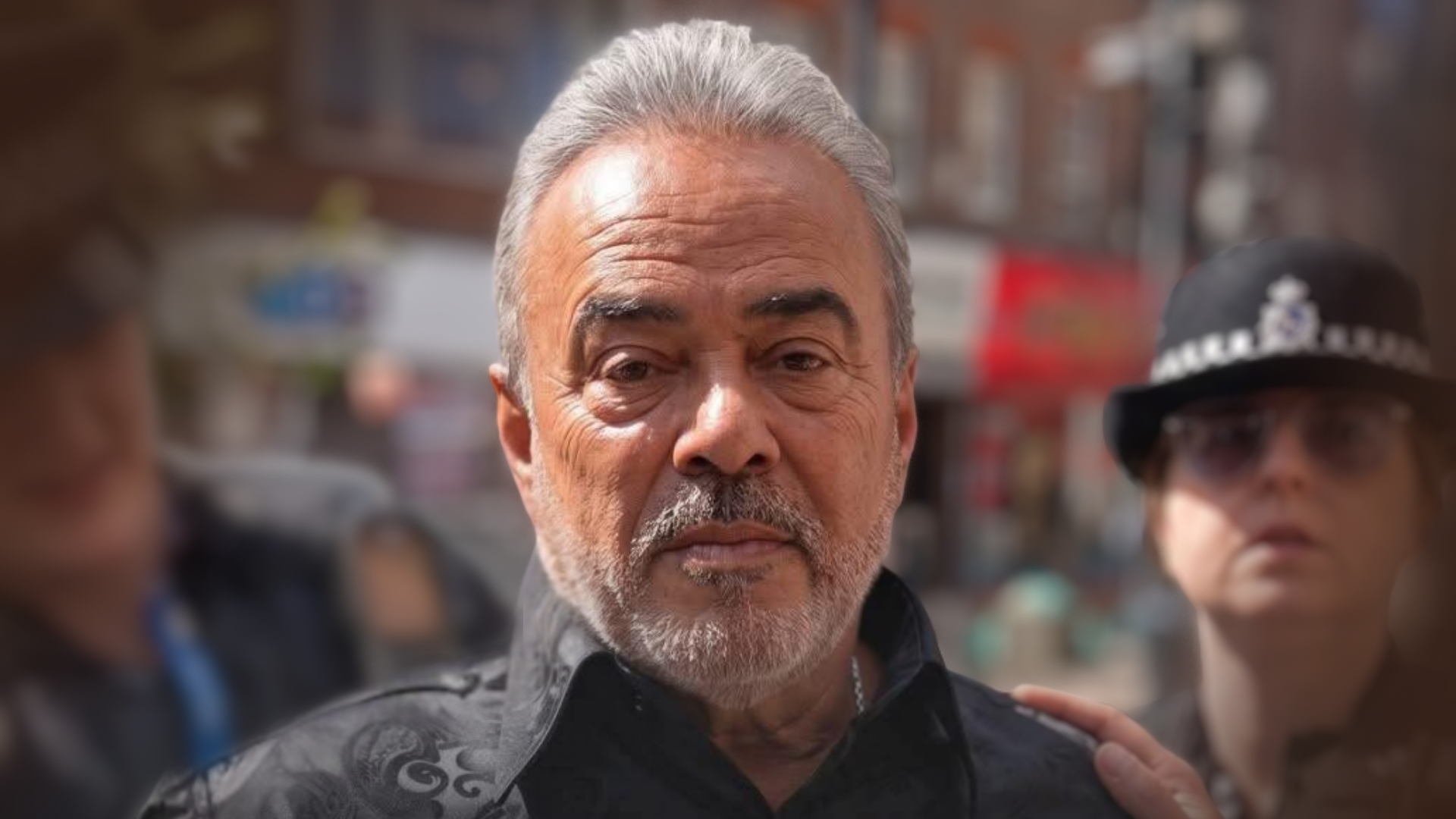
Another preacher arrested for speaking in public
A 66-year-old pastor and grandfather with 45 years of ministry and no criminal record was arrested in Watford last month after criticising Islam in a public street sermon.
The footage has been viewed by millions online. It shows Pastor Steve Maile surrounded by officers, placed in double handcuffs, and taken away while bystanders booed.
Mr Maile had been preaching for 10 minutes, singing hymns, drawing on Scripture and calling people to repentance. He criticised the history of violent Islam, while saying he had compassion for Muslims and wanted them to come to Christ.
An initial allegation of assault against a teenager – flatly denied by Maile and by witnesses who had filmed the entire encounter – was subsequently dropped.
He remains under investigation for “alleged hate-related public order offences connected to comments critical of Islam and LGBT lifestyles”.
He was held for about 12 hours and denied access to a toilet for prolonged periods, while his family was not informed of his whereabouts. He required medical attention and splints for injuries to his hands from the restraints.
The Christian Legal Centre, which is representing Maile, has raised serious concerns about whether policing in the United Kingdom is now being applied selectively against Christian expression.
That concern is well founded. This is not an isolated incident.
HRLA has previously covered the cases of Dia Moodley, arrested multiple times in Bristol for preaching Christian beliefs in the public square, Shaun O'Sullivan, who was acquitted after a hate claim, and Karandeep Mamman, whose religious harassment case was thrown out.
Each case followed the same pattern: a peaceful street preacher, a police intervention, and a charge framed around the content of his speech rather than any identifiable harm.
The legal question is a straightforward one. Public order legislation prohibits incitement to violence and harassment.
It was not designed to prohibit theological disagreement, or the expression of the view that one religion is false.
A 10-minute public sermon that draws no violence and prompts bystanders to film in support of the preacher does not, on any defensible reading, constitute a threat to public order.
Holding a man for 12 hours on that basis is disproportionate.
Doing so while declining to pursue those who have physically assaulted other preachers for their speech compounds the problem.
HRLA has defended street preachers in Australia, including Allan Duxfield, and the same principles apply here.
The freedom to speak openly about religious belief in a public place is a fundamental liberty.
When policing is applied in a way that systematically disadvantages one religious community while extending tolerance to others, it ceases to be law enforcement and becomes something else entirely.
Do you like this page?