
- OUR CASES
-
Join Us
- Current Issues
-
About
When one implied freedom displaces all others
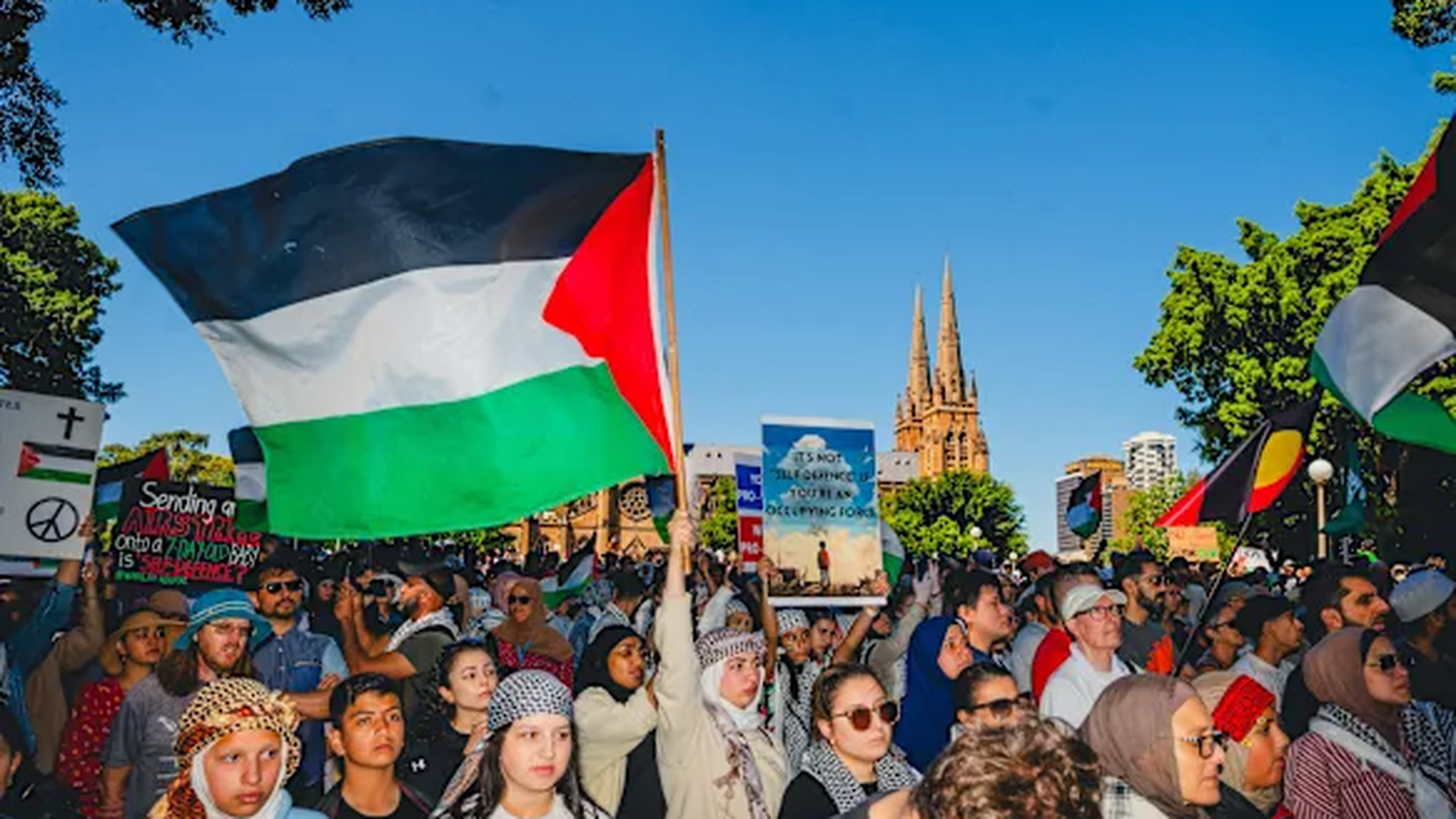
Three years of weekly Sunday protests outside St Mary’s Cathedral have left Catholic Archbishop of Sydney Dr Anthony Fisher with an unanswered question: why has the freedom to protest been treated as a right that overrides every other?
The Archbishop addressed the Samuel Griffith Society on Sunday with legal precision. He does not oppose protest. He does not oppose the implied constitutional freedom of political communication.
What he challenges is the assumption – reproduced in recent NSW court decisions – that political communication carries “presumptive priority” over other significant freedoms, including the freedom of his own congregation to gather and worship without intimidation and disruption.
The legal record supports that challenge. NSW courts struck down the Minns government’s anti-protest laws in April and rejected an earlier police move-on power outside places of worship.
The same constitutional framework has been used to uphold limits on protests outside abortion facilities. The same principle, applied differently. The asymmetry demands explanation.
“The recent rhetoric of some activists and even some judges suggests that political communication has a presumptive priority or trumping power over many or all other rights, no matter how it is exercised,” Archbishop Fisher said.
“After almost three years of this experience, I think it is high time to ask whether we have the balance right between freedom of political communication, now recognised as implied in our Constitution, and other fundamental freedoms, including the freedom to gather and worship in peace.”
Archbishop Fisher’s second observation is also difficult to dismiss. These protests target Israel and Jews specifically – not Russia’s conduct in Ukraine, not other conflicts that might trouble a conscience genuinely moved by peace. Where genuine peace advocacy would be indiscriminate, this is not.
“Old-fashioned antisemitism,” Archbishop Fisher said, may be the motivating factor behind the protests.
That is a serious claim. It is also a legally significant one. The implied freedom of political communication is used to place the freedom to protest “above all other rights”, according to Dr Fisher.
Federal Court Justice Ian Jackman suggested last week the High Court must address this directly. He is right.
The right to worship in peace and the right not to be subject to targeted intimidation each Sunday morning are not lesser freedoms. Archbishop Fisher’s question – whether Australia has the balance right – is one the courts cannot avoid indefinitely.
Do you like this page?