
- OUR CASES
-
Join Us
- Current Issues
-
About
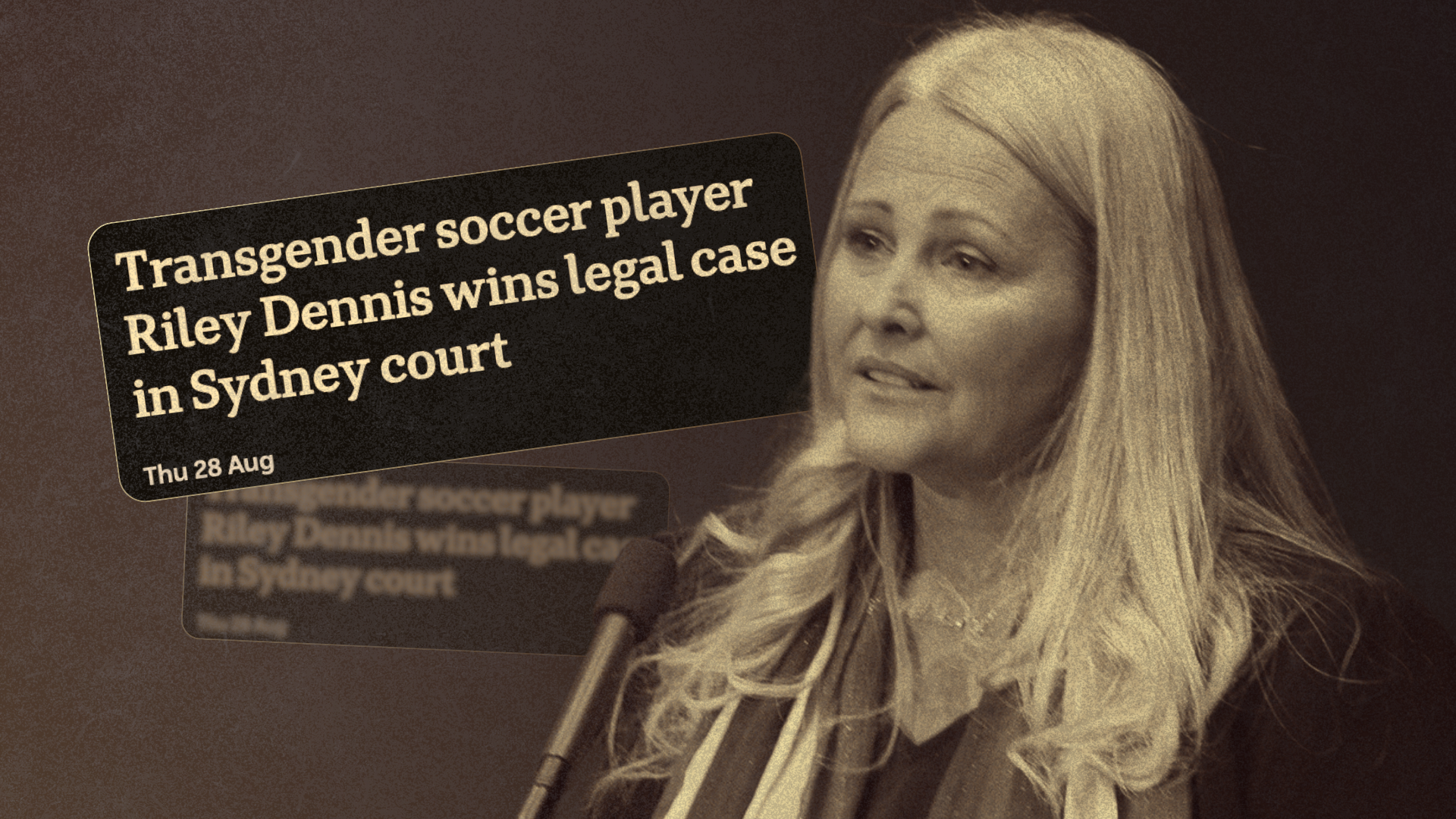
Kirralie Smith case exposes deficiencies in vilification law
Australian mum Kirralie Smith lost her appeal against an apprehended violence order.
The AVO was issued after Kirralie posted online her concerns about a transgender-identifying man playing in a women’s soccer league.
A judge found Kirralie engaged in a “sustained campaign of belittling, harassment and intimidation” and the NSW Supreme Court of Appeal upheld the judgement.
The judgment and rejection of Kirralie’s appeal is troubling enough in relation to free speech, given the contested nature of transgender ideology, especially as it relates to women's sport.
But according to legal expert Associate Professor Neil Foster, there are concerns the judgment was also wrong in law.
In my view both cases were wrongly decided – that is, I don’t think Ms Smith actually contravened the legislation. There is also a significant question as to whether the law, in its application to these circumstances, is contrary to the implied freedom of political communication under the Constitution. And in any event, it is arguable the law as it stands (even if valid) is too restrictive on free speech and should be amended.
Foster argues that Kirralie’s statements do not meet the definition of vilification in the law, which rests on inciting hatred, contempt, and ridicule. That’s because Kirralie’s comments were about men in general participating in women’s sport, not about the man himself.
Foster argues that there was no call for hatred or incitement, before commenting on the problems with broadly framed “hate speech laws” in general:
when comments on a major issue of public interest can be classified as in this case as inciting “hatred towards, serious contempt for, or severe ridicule of” persons, then the parameters of the law are so unclear as to amount to a serious impairment of legitimate public comment.
The concerns expressed by Kirralie are those shared by many parents who do not want to have males competing against their daughters.
It is deeply concerning that the law has been used to police contested ideas, like men in women’s sport, that have serious practical consequences in the world.
Protecting women and girls from radical transgender ideology, and their rights to single-sex spaces and activities, requires protection of the right to speak truth openly.
HRLA exists to defend this right for all Australians.
Do you like this page?